
Curcumin and Mood: How Turmeric’s Anti-Inflammatory Power Supports Emotional Well-Being
11/20/20253 min read
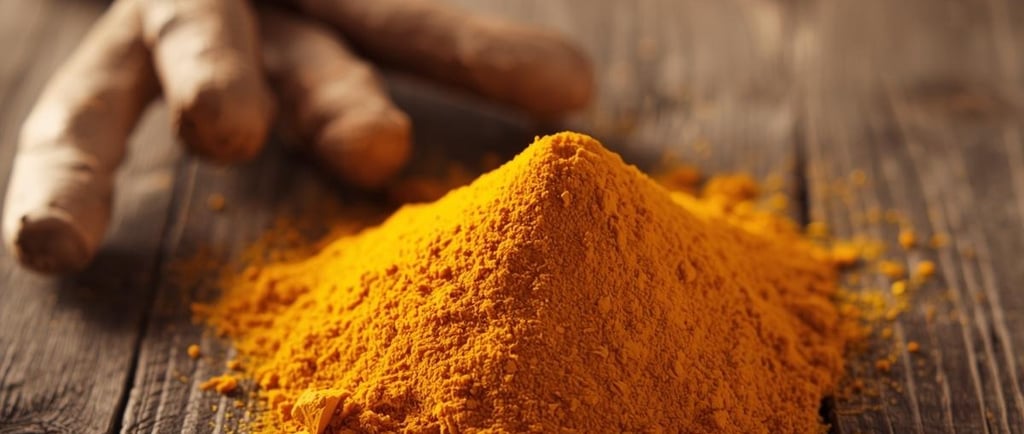
Inflammation and oxidative stress are increasingly recognized as key contributors to mood disturbances and depressive symptoms. As a result, compounds that help regulate inflammation and support neural health have gained attention - and at the forefront of these is curcumin, the principal active curcuminoid in turmeric (Curcuma longa). Not only does curcumin exhibit potent anti-inflammatory and antioxidant properties, it also interacts with biochemical pathways implicated in mood regulation and neural resilience.
Turmeric has been used in traditional medicine for centuries, but modern research has begun to validate its role in supporting mental wellness, particularly in contexts where inflammation and stress interplay with neurotransmitter function. Below, we explore what the science says about curcumin’s effects on mood, depression symptoms, and the neurochemical environment of the brain.
How Curcumin Works: Anti-Inflammatory and Neuroprotective Mechanisms
Inflammation is not just a physical immune response. Chronic low-grade inflammation affects neurotransmitter production, neuroplasticity, and stress hormone regulation - all of which are relevant in depressive symptoms. Curcumin targets these processes through multiple biological pathways:
Anti-inflammatory action: Curcumin inhibits pro-inflammatory cytokines such as IL-1β, IL-6, and TNF-α, which are associated with altered serotonin metabolism and mood dysregulation.
Antioxidant support: By promoting antioxidant enzyme activity (e.g., superoxide dismutase, catalase) and reducing lipid peroxidation, curcumin helps protect neural cells from oxidative stress - a factor linked to mood disorders.
Neurotrophic influence: Curcumin’s impact on pathways involving BDNF (Brain-Derived Neurotrophic Factor) supports neural growth, synaptic plasticity, and resilience to stress - elements that are often impaired in depression.
These mechanisms create a biological environment that is more conducive to mood stability and cognitive balance, particularly when inflammatory processes are elevated.
Clinical Evidence: Curcumin and Depressive Symptoms
1. Randomized, Double-Blind, Placebo-Controlled Trials
One of the most cited clinical trials on curcumin for depression involved 56 individuals diagnosed with major depressive disorder (MDD). Participants received 500 mg of curcumin twice daily for 8 weeks or placebo. While both groups showed initial improvement, curcumin demonstrated significantly greater improvements in overall depression scores and mood-specific factors between weeks 4 and 8, suggesting that curcumin has a measurable antidepressant effect.
2. Curcumin as an Adjunct to Conventional Antidepressants
In a larger study involving 108 adults receiving standard antidepressant medication, supplementation with curcumin (1000 mg/day) for 6 weeks led to significant reductions in depressive symptom scores compared to placebo. This trial also showed decreases in inflammatory markers (e.g., IL-1β, TNF-α), increases in brain-derived neurotrophic factor, and reduced stress hormone (cortisol) levels - indicating that curcumin may enhance the effects of traditional treatment by modulating inflammation, neural health, and stress biology.
3. Meta-Analytic Support
A meta-analysis that pooled data from multiple clinical trials concluded that curcumin is significantly more effective than placebo in reducing depressive symptoms. This analysis also noted that curcumin showed anti-anxiety effects in several studies, and that it was generally safe and well-tolerated with minimal adverse effects reported across trials.
Curcumin vs. Standard Antidepressants
While earlier anecdotal reports and preliminary studies have suggested curcumin’s mood-supporting potential relative to standard antidepressants, rigorous clinical comparisons are still limited in number. However, some research indicates that curcumin may work via different biological pathways - particularly inflammation modulation and neurotrophin regulation - that can complement traditional monoaminergic antidepressants (such as SSRIs).
Curcumin’s effect in enhancing neurotrophic factors and reducing inflammation may assist in creating a brain environment more receptive to conventional therapies without replacing them, especially in complex cases of mood disorders.
Practical Implications for Mood and Brain Environment
The clinical and mechanistic evidence suggests that curcumin may help:
Reduce inflammation and oxidative stress associated with depressive symptoms
Support neural plasticity and BDNF expression, which is linked to improved mood and resilience
Complement existing treatments by addressing biological processes often untouched by standard antidepressants
Support general mental well-being in individuals with elevated inflammatory states or chronic stress
Importantly, most clinical studies used standardized curcumin extracts at doses higher than what is typically obtained from dietary turmeric alone, underscoring the value of concentrated supplementation in research contexts.
Safety and Tolerability
Across clinical trials, curcumin has been consistently reported to be safe and well-tolerated with few adverse effects. No serious safety concerns have arisen at therapeutic doses used in research, although formulation and absorption can vary widely between products.
A key challenge with curcumin is bioavailability, as it is poorly absorbed on its own. Many supplement formulations (including those combined with piperine) are designed to improve systemic uptake, which may help maximize its potential benefits.
Conclusion
Curcumin - the principal active compound in turmeric - exhibits anti-inflammatory, antioxidant, and neuroprotective properties that are biologically relevant to mood regulation and brain health. Clinical evidence, including randomized and placebo-controlled trials, supports its role in reducing depressive symptoms, enhancing neural resilience, and complementing conventional antidepressant therapies.
While further research is warranted to fully define optimal formulations and long-term effects, current findings position curcumin as a promising adjunctive support for emotional well-being, particularly in contexts where inflammation, oxidative stress, and neurotransmitter imbalance contribute to mood dysregulation.
ٍSources:
Contact
Reach out anytime; we’re happy to help
Sales And Support:
Support@elevium-co.com
© 2026. All rights reserved.
Elivium Co, LLC - 16, 101. Reykjavík, Iceland